Put the Phone Down: The Case for Experiences You'll Remember Instead of Post
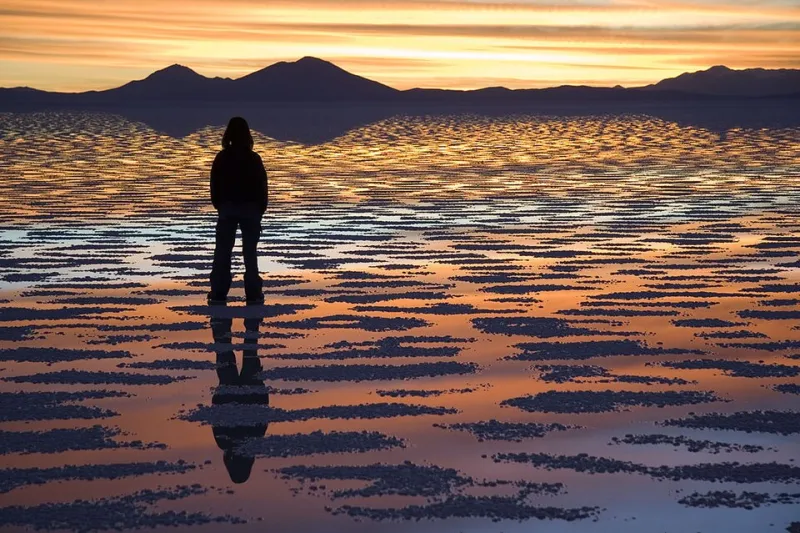
Photo: Hılalelifozkan, CC BY-SA 3.0, via Wikimedia Commons
Here's a scene you've probably lived: you're somewhere genuinely beautiful — a overlook in Utah, your best friend's backyard wedding, your kid's first time seeing the ocean — and the moment you feel the awe hit, your hand moves for your phone. Frame it. Filter it. Post it. Check the likes. Re-read the caption. Post it again in your Stories.
By the time you look up, the moment has moved on without you.
I'd like to make an unfashionable argument: the best moments of your life should mostly go undocumented. Not because photos are bad, but because the compulsion to capture everything has quietly changed what moments are for. We've started producing content with our lives instead of living them.
What the Research Says About Cameras and Memory
The instinct to document feels like preserving a memory. The science suggests it often does the opposite.
A well-known study by psychologist Linda Henkel — fittingly titled 'The Photo-Taking Impairment Effect' — found that people who photographed objects in a museum remembered them worse than people who simply looked. The act of photographing seemed to outsource the remembering: the camera was taking the memory, so the brain didn't bother filing it. Follow-up research added a wrinkle — zooming in on details preserved memory better — but the broader finding has been echoed repeatedly: passive snapping degrades presence.
There's more. Studies on social media use consistently link heavy posting and self-presentation online with lower in-the-moment enjoyment. Part of this is the performative tax: when you know an experience will be seen, part of your attention splits off to manage the audience. You're not just at the concert; you're also the concert's social media manager. That second job is exhausting, and it's unpaid.
And what do we get for it? A camera roll of ten thousand images almost nobody — including us — will ever look at again. We traded presence for pixels and didn't even keep the pixels.
What Memory Gets That Content Doesn't
An unposted memory works differently. Because you have no audience to serve, your attention stays where you are. You notice the smell of the rain, the argument happening at the next table, the way the light made your friend laugh. And because you never see a frozen version of the moment, your brain keeps it the way memories actually live — soft-edged, emotional, yours.
There's also something quietly radical about an experience that belongs only to you. Not everything needs to be a broadcast. Some of the richest moments of a life are the ones that would make terrible content: the long drive with no destination, the conversation that ran past midnight, the Tuesday hike where nothing happened except that you felt completely alive. Try captioning that. You can't. That's the point.
I'm not advocating burning your phone or swearing off photos forever. My kids' faces, my parents' milestones, the once-in-a-lifetime stuff — document it, please. The argument is about the default, the reflex to capture everything by habit rather than choice. Presence should be the default. The camera should be the exception.
Try It: One Day, No Camera
Here's the challenge, and it's simple: pick one day this weekend — or even one afternoon — and leave the camera at home. No photos, no videos, no Stories. If you're feeling ambitious, leave the phone entirely; if not, keep it on Do Not Disturb in your pocket for genuine emergencies only.
Then go do something you'd normally document. A farmers market. A hike. Dinner with people you like. And instead of capturing it, practice keeping it: notice three sensory details, tell someone about it that evening, and — this is the weirdly powerful part — write one sentence about it before bed. Not for the algorithm. For you.
You might be surprised by what you remember. You might be more surprised by what you notice in the first place.
The memories worth having were never really for the feed. They were for the person standing in the middle of them. Go stand in one this weekend — and let it be yours alone.