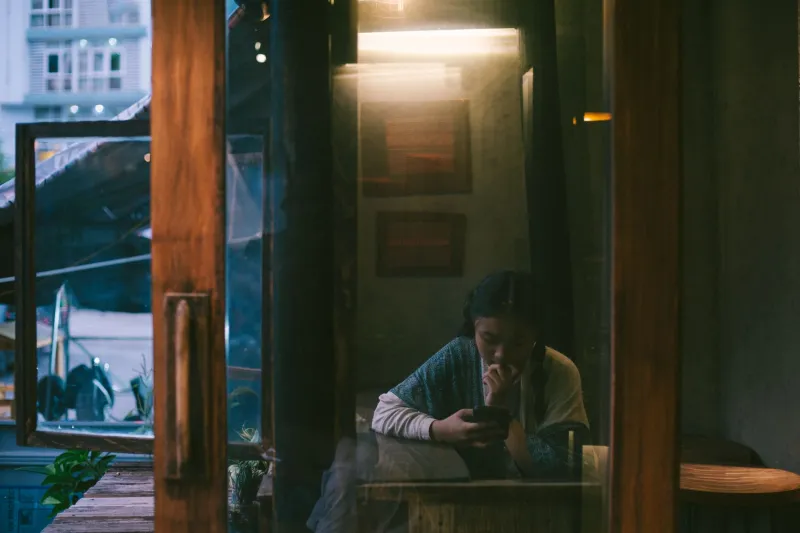
The Coffee Is Brewing, the Commute Is Long, and Your Life Is Happening Right Now
Photo: Unknown authorUnknown author, Public domain, via Wikimedia Commons
Do the math sometime. The average American spends roughly 100 hours a year commuting, about 60 hours waiting in lines, and untold more in the kitchen while the toaster does its thing, in the pharmacy's hold queue, in the five minutes before a meeting actually starts. Stack that up over a lifetime and you're looking at years — literal years — of what most of us file under "nothing happening."
Here's the uncomfortable question: what if that's not nothing? What if that's the bulk of your life, and you've been skipping it?
The Myth of the Highlight Reel
We've quietly adopted a two-tier system for living. There's the "real life" tier — birthdays, promotions, beach vacations, the first snow — and then there's the filler tier, the connective tissue we're supposed to power through on our way to the good stuff.
But think about what you actually remember from your favorite trip. Sure, the beach was great. You also probably remember the gas station burrito, the playlist argument, the weird fog rolling over the highway at 6 a.m. The in-between stuff isn't separate from the experience. It is the experience, just wearing plain clothes.
Psychologists have a name for our allergy to these moments: we experience waiting as a threat to our sense of control, so we numb it with phones, podcasts, and mental time-travel. The problem is that numbing doesn't discriminate. Train yourself to scroll through the boring minutes and you'll find it harder and harder to be present for the vivid ones too.
Dead Time or Open Time?
There's a reframe that changes everything: instead of "dead time," try "open time." Dead time demands escape. Open time simply asks, what's here?
The coffee brewing. The steam curling off the mug. The particular light at 7:40 a.m. in October. The sound of your kid narrating their dream from last night while you both wait for the school bus. None of this is dramatic. All of it is available, and all of it evaporates if your attention is parked three moves ahead.
Five Ways to Reclaim the In-Between
1. Narrate one transition a day. Pick a single threshold moment — walking to the car, filling the kettle — and describe it to yourself like a nature documentary. It sounds silly. It works, because it forces your attention out of the forecast and into the present tense.
2. Leave the phone in one pocket of your life. Not everywhere. Just one zone: the waiting room, the drive-thru line, the microwave countdown. Let your brain idle for ninety seconds. Idling is where noticing happens.
3. Make waiting a sensory check-in. Stuck in line at the DMV? Great — you've got a captive moment. Name five things you can see, three you can hear, one you can smell. It's less a wellness hack than a way of saying yes to where you already are.
4. Give transitional time one small job. Water a plant on your way out the door. Say one genuine sentence to the barista. Tiny rituals stitch otherwise formless minutes into something that feels like a life, not a schedule.
5. End the day with the ordinary stuff. Before bed, recall one mundane moment that was actually kind of nice. Not the win at work — the moment. This trains your memory to stop filtering out the quiet 90% of your existence.
The Ordinary Day Is the Actual Prize
Here's the thing nobody tells you at the goal-setting seminar: the big moments are rare by definition. If your happiness depends on them, you've signed up for a life that's mostly disappointment with occasional fireworks.
But if you can find the day itself — the commute, the coffee, the waiting — livable, even lovely, then your baseline changes. You stop needing permission from the calendar to feel like you're really here.
Your life isn't waiting for you at the destination. It's idling in the drive-thru lane right now, humming along to the radio. Might as well be there for it.