Where Did the Fun Go? How to Reclaim the Joys You Quietly Abandoned
You Didn't Lose Yourself. You Just Got Really Busy.
Think back to ten years ago. What were you doing on a random Saturday afternoon? Maybe you were knee-deep in a watercolor project, or driving nowhere in particular with the windows down and a playlist that felt like it was written just for you. Maybe you had a standing Sunday brunch crew that could stretch a two-hour meal into an entire afternoon. You laughed harder. You stayed out later. You said yes to things that had no productive outcome whatsoever — and that was the whole point.
Now think about last Saturday.
If there's a gap between those two pictures, you're not alone. Most American adults hit a point — usually somewhere in their late twenties or thirties — where life quietly reorganizes itself around obligation. The hobbies get shelved. The spontaneous trips become "maybe next year." The late-night phone calls with your best friend get replaced by text threads that trail off after three messages. None of it happens dramatically. It just... happens.
The question isn't how you got here. The question is what you're going to do about it.
Why We Give Up the Good Stuff
Here's something that might sting a little: most of us don't sacrifice our joy because we have to. We do it because we've been conditioned to believe that productivity is the most valuable way to spend our time.
American hustle culture runs deep. There's a persistent, low-grade guilt that kicks in whenever you're doing something that isn't "useful" — something that doesn't move a project forward, build your career, or check something off a list. Painting for fun starts to feel self-indulgent. Road tripping with no destination feels irresponsible. Spending three hours at a coffee shop just talking feels wasteful.
Psychologists call this "productive procrastination bias" — the tendency to favor tasks that feel efficient, even when they're not actually the most important thing we could be doing. Over time, this bias quietly edits your life. The things that once fed your spirit get categorized as luxuries, and luxuries are always the first to go.
Add in the genuine demands of adult life — mortgages, kids, aging parents, demanding jobs — and it's easy to see how joy becomes a casualty of circumstance. But here's the thing: research consistently shows that people who maintain hobbies, social rituals, and playful experiences report higher life satisfaction, lower stress levels, and even better professional performance. Joy isn't the opposite of productivity. It's the fuel for it.
Running Your Own Joy Audit
Before you can bring anything back, you need to figure out what's actually missing. This is where the joy audit comes in — and it's simpler than it sounds.
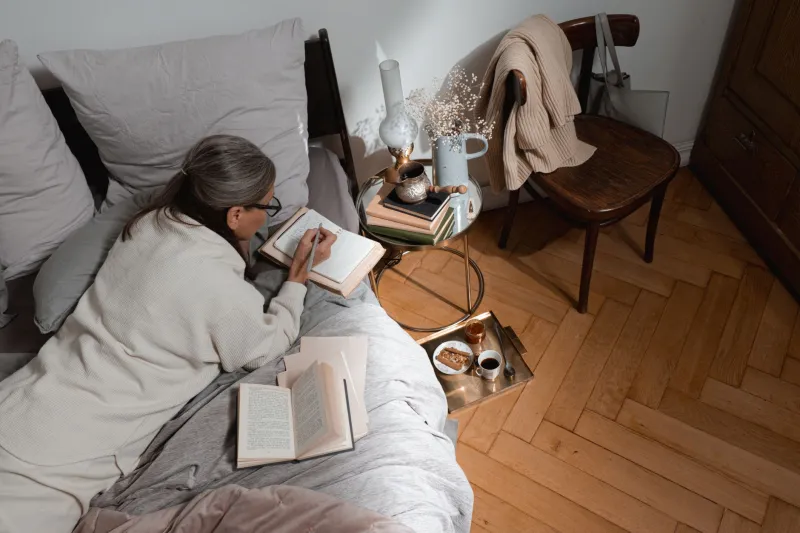
Grab a notebook (or the Notes app, no judgment) and work through these three prompts:
1. What did you love doing between ages 15 and 25 that you no longer do? Don't filter. Write down everything — rollerblading, open mic nights, cooking elaborate meals, hiking, playing guitar, staying up until 2 a.m. playing card games. The specifics matter more than you think.
2. What do you always say you'll do "someday"? Someday I'll take that cross-country road trip. Someday I'll get back into photography. Someday I'll find a pottery class. These aren't random fantasies. They're signals. Your brain keeps returning to them because some part of you genuinely needs them.
3. When was the last time you lost track of time doing something you weren't obligated to do? That experience of total absorption — what psychologists call "flow" — is one of the most reliable indicators of genuine joy. If you can't remember the last time it happened, that's important information.
The Reintroduction Framework (No Life Overhaul Required)
Here's where most advice goes sideways: it tells you to make big, sweeping changes. Quit your job. Wake up at 5 a.m. Commit to a 30-day challenge. That's exhausting, and for most people, it doesn't stick.
Instead, try this approach: start embarrassingly small.
If you miss painting, don't sign up for a six-week course on day one. Buy a cheap set of acrylics and spend twenty minutes with them on a Tuesday evening. If you miss road trips, don't plan a two-week journey across the Southwest right away. Drive somewhere within two hours of home this weekend with no agenda. If you miss long, rambling conversations with friends, don't wait for a weekend that works for everyone — call someone on your lunch break and just talk for fifteen minutes.
The goal in the beginning isn't to fully restore the experience. It's to prove to yourself that the door is still open.
A few practical moves that actually work:
- Schedule it like a meeting. If it's not on the calendar, it won't happen. Block off even 45 minutes a week for one joy activity and treat it as non-negotiable.
- Remove the performance pressure. You're not picking up guitar again to play for anyone. You're not running again to train for a race. Do it badly. Do it slowly. Do it just because it feels good.
- Tell someone. Accountability isn't just for fitness goals. Telling a friend you're getting back into hiking — or cooking, or improv, or whatever it is — makes it more real and more likely to stick.
- Protect it from the guilt spiral. The minute you start enjoying yourself, there's a decent chance your brain will pipe up with a list of things you "should" be doing instead. Notice that voice, acknowledge it, and keep going anyway.
The Permission You've Been Waiting For
There's no official moment when someone hands you back your joy. No milestone you have to hit first, no permission slip from your boss or your partner or your bank account. The life you want to be living — the one with more laughter, more adventure, more of the things that make you feel like you — is available right now, in the margins of the life you already have.
You don't need a sabbatical. You don't need to move to a new city or reinvent yourself from scratch. You just need to start treating joy as something that belongs in your life by default, not as a reward you have to earn after everything else is handled.
Because here's the truth: everything else is never fully handled. There will always be another email, another errand, another reason to wait. The only way to enjoy your life fully is to decide — right now, in this season, with all its chaos and imperfection — that it's already time.