Less Is More Memorable: The Case for Choosing Your Moments Wisely
The Invitation You Didn't Want But Said Yes to Anyway
You know that feeling. The text comes in on a Friday afternoon — a birthday dinner, a networking happy hour, a neighbor's housewarming — and your gut immediately sinks just a little. You don't not like these people. It's not that you have anything better going on. But something in you just... doesn't want to go.
And then you go anyway. Because saying no feels rude, or lazy, or like you're missing out on something you might regret later.
Here's the thing nobody really talks about: that low-grade dread you felt beforehand? It usually shows up during the event too. You spend two hours making small talk, checking your phone, and doing mental math on how soon you can leave without it being weird. You come home tired in a way that sleep doesn't quite fix.
That's not living fully. That's performing availability.
The Hidden Cost of Always Showing Up
American culture has a complicated relationship with busyness. We treat a packed schedule like a badge of honor, and we've gotten so good at saying yes that many of us have completely lost touch with what we actually want to do.
Psychologists call the anxiety around missing out FOMO — fear of missing out — and it's been linked to lower life satisfaction, increased social comparison, and a chronic sense of not-enough-ness. What's interesting, though, is that FOMO rarely kicks in during the event you dragged yourself to. It kicks in when you imagine what everyone else might be doing without you.
In other words, FOMO isn't really about experiences. It's about identity. It's the fear that if you're not everywhere, doing everything, you'll somehow fall behind in a race you didn't consciously sign up for.
The antidote isn't to stop caring. It's to get more intentional about what you actually care about.
What a Regret Audit Actually Looks Like
Here's a simple exercise worth trying. Think back over the last six months and make two lists.
On the first list, write down the experiences that genuinely lit you up — the moments that felt alive, that you still think about, that recharged you rather than drained you.
On the second list, write down the things you did mostly out of obligation, habit, or the fear of what people might think if you didn't show up.
Now look at both lists honestly. How much of your time and energy went toward column two? And how did those experiences actually make you feel?
This is what a regret audit looks like in practice — not dwelling on the big life choices you wish you'd made differently, but examining the small, repeated patterns of how you spend your days. Because your life isn't made of grand gestures. It's made of Tuesday evenings and Sunday afternoons and the dozens of little decisions you make about where to point your attention.
The Psychology of Selective Living
There's a concept in behavioral economics called the paradox of choice — the idea that having more options doesn't make us happier, it makes us more anxious and less satisfied with whatever we choose. The same principle applies to experiences.
When you say yes to everything, nothing gets to be special. The concert you half-wanted to attend blurs into the rooftop party you felt obligated to show up for, which blurs into the work event you couldn't get out of. Your memories flatten. Your energy thins out. And ironically, you end up with less to show for all that activity, not more.
But when you start being genuinely selective — when you protect your time fiercely and only commit to the things that actually excite you — something shifts. The experiences you do say yes to carry more weight. You show up fully present instead of mentally halfway out the door. You remember them better. They mean more.
Researchers studying autobiographical memory have found that emotionally resonant experiences — the ones we were genuinely engaged in — are encoded more deeply and recalled more vividly than routine or obligatory ones. Basically, your brain is already doing the math. It just needs you to catch up.
How to Figure Out What Actually Counts for You
Selective living doesn't mean becoming a hermit or blowing off your responsibilities. It means developing a clearer sense of your own values and using them as a filter.
A few questions worth sitting with:
When you imagine your ideal weekend a month from now, what does it look like? Not what you think it should look like — what genuinely sounds good to you?
After which kinds of experiences do you feel most like yourself? Pay attention to what energizes you versus what leaves you feeling hollow, even when it looked fun on paper.
Who are the people you feel genuinely better after spending time with? And who leaves you feeling vaguely worse, even if you can't quite explain why?
What are you afraid will happen if you say no more often? That's usually where the real work is.
Your answers won't look like anyone else's, and that's kind of the whole point. Selective living is deeply personal. What fills one person up might completely drain another, and no algorithm, no social feed, and no well-meaning friend can tell you which experiences belong in your life.
Saying No Is a Skill Worth Practicing
If you've spent years defaulting to yes, saying no is going to feel uncomfortable at first. You might feel guilty. You might worry someone will be offended. You might second-guess yourself the moment you hit send on that polite decline.
That discomfort is normal, and it fades. What doesn't fade is the growing sense of ownership over your own life — the feeling that your time actually reflects your priorities instead of everyone else's expectations.
Start small. Decline one thing this week that you were going to say yes to out of obligation. Notice how it feels. Notice whether the sky falls. (It won't.)
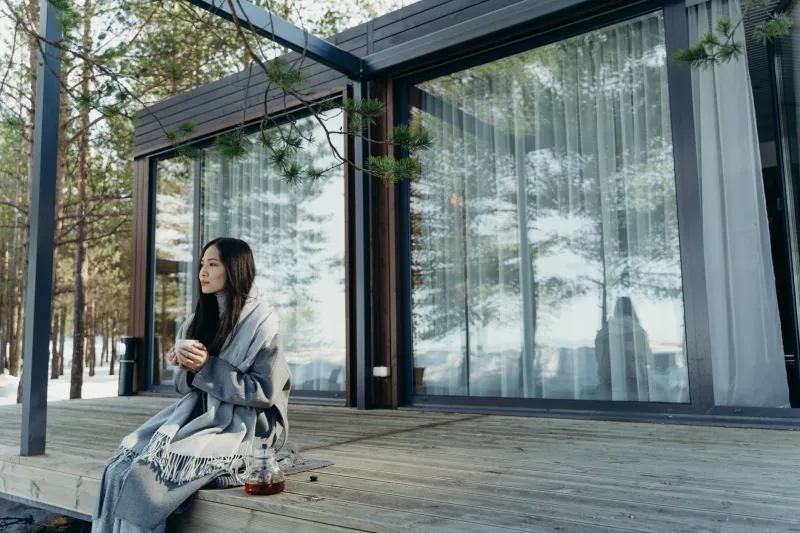
Then notice how you spend that time instead. Maybe you'll use it to finally take that long walk you keep putting off. Maybe you'll call someone you actually miss. Maybe you'll just sit on your porch with a cup of coffee and let your mind wander for a while.
Any of those things beats two hours of polite small talk at an event you didn't want to attend.
The Life That's Actually Yours
Here's what selective living ultimately comes down to: you have a finite number of evenings, weekends, and free hours. Every yes is a no to something else — including rest, solitude, the people who matter most, and the quiet moments where you actually get to hear yourself think.
The goal isn't to do less for the sake of doing less. It's to do more of what matters by ruthlessly clearing out what doesn't.
The most fulfilling life isn't the fullest one. It's the most intentional one — curated with care, anchored in your actual values, and spacious enough to let the good stuff breathe.
So the next time an invitation lands in your inbox and your gut quietly says not this one — maybe trust it. That instinct might just be the most honest thing about you.